

Research Service for Whole genome and Amplicon
Two-Sentence Service Description Elevate your discovery with high-precision Whole Genome and Amplicon Sequencing from Crispr Cas Co., Ltd., powered by our premier regional partners U2Bio (Thailand) and Apical Scientific (Malaysia). We bridge local scientific support with internationally accredited genomic platforms to deliver accurate, publication-ready data you can trust.
Headline / Banner
Innovation-Focused
Trust & Quality: Global genomic precision, local scientific expertise—sequencing data you can publish with confidence.
Partnership Focus: Connecting your research to Southeast Asia’s premier sequencing hubs for reliable, high-impact genomic insights.
End-to-End Value: From sample handling to publication-ready sequences—seamless, accurate, and backed by proven regional excellence.
Ultra-Compact: Precision sequencing. Trusted regional partners. Publication-ready results.
Soe Moe Aung
CEO (Crispr Cas Company)
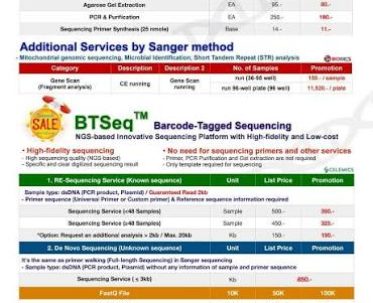
All package included for your research sequencing analysis
U2Bio Thailand

Apical scientific malaysia
DHL transportation
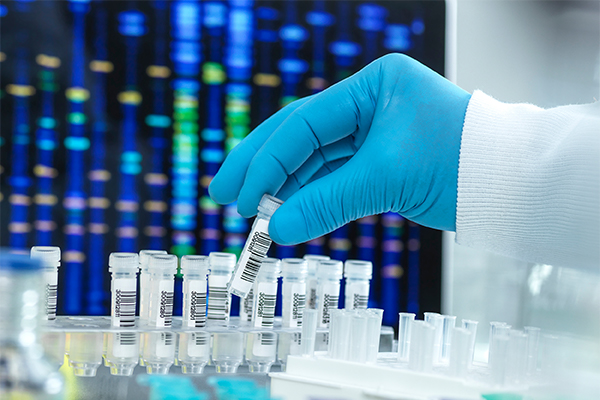
Sending-Out Sequencing Research Outcome
Low Cost
Short period
Easy to analyse
No more lab jobs and troubleshooting
How should I verify DNA quality and concentration before sending out samples?
Quantify your DNA using a fluorometric method like Qubit rather than relying solely on NanoDrop, which can overestimate concentration due to contaminants or degraded fragments. Target an OD 260/280 purity ratio of 1.8–2.0, ensure genomic DNA is free of RNA contamination, and run an agarose gel to confirm clean, intact bands with no degradation.
What elution buffer and volume ensure the smoothest library preparation?
Elute samples in nuclease-free water, 10 mM Tris-HCl (pH 8.0–8.5), or Low TE buffer (0.1 mM EDTA). Avoid concentrated buffers or high EDTA, which can interfere with enzymatic reactions and trigger extra cleanup steps. Providing slightly above the minimum required volume ensures enough material for both incoming QC and reliable library preparation.
How long does testing typically take before results are available?
Our country possesses approximately 170 billion barrels of oil that can be recovered with today’s technology. Of that number, 165 billion barrels are located in the oil sands.
How can I prevent poor data output or "sequencing at risk" outcomes?
Confirm that every sample meets the sequencing facility’s exact concentration, volume, and purity thresholds before shipping, as below-spec samples are typically classified as “sequencing at risk” and charged regardless of data yield. For precious, low-input, or borderline samples, consult with your sequencing support team upfront to select the right cleanup step or library workflow before the run begins.